The difference, with one example
Take a 2026 BMW X5 xDrive40i:
| Curb weight (empty) | 4,998 lbs |
| GVWR (maximum loaded weight) | 6,360 lbs |
| Payload: GVWR − curb weight | 1,362 lbs |
Empty, it weighs under 5,000 lbs. Its rating is over 6,000 lbs. Same vehicle, two very different answers to "is it over 6,000 lbs?"
Curb weight is a measurement. GVWR is a limit: the engineers decide how much the frame, axles, brakes and tires can safely carry, and that number goes on the label. You don't have to load the vehicle to its GVWR for the rating to apply.
Curb weight vs GVWR for 6 popular models
| Model (2026) | Curb weight | GVWR | 6,000 lbs tax test |
|---|---|---|---|
| Tesla Model Y | 4,061 to 4,473 lbs | 5,223 to 5,712 lbs | 6,000 lbs or less |
| Ford F-150 | 4,391 to 5,863 lbs | 6,220 to 7,400 lbs | Qualifies |
| Mercedes G-Wagon | 5,534 to 6,746 lbs | 7,055 to 7,716 lbs | Qualifies |
| BMW X5 | 4,919 to 5,573 lbs | 6,173 to 7,055 lbs | Qualifies |
| Tesla Model X | 5,152 to 5,434 lbs | 6,129 to 6,561 lbs | Qualifies |
| Chevy Tahoe | 5,509 to 5,877 lbs | 7,400 to 7,600 lbs | Qualifies |
Every one of these weighs under 6,000 lbs empty on most trims. 5 of the 6 pass the tax test anyway, because of GVWR. Other models: GVWR lookup · vehicle weights.
Which one the IRS uses
The 6,000 lb line comes from section 280F of the tax code, which caps depreciation on "passenger automobiles". A vehicle is a passenger automobile only if it is rated at 6,000 lbs or less. Which rating depends on the vehicle:
| Vehicle | Weight the law tests | Where you find it |
|---|---|---|
| Truck, van or SUV | GVWR (gross vehicle weight) | Label in the driver's door opening |
| Car (sedan, coupe, wagon) | Unloaded gross vehicle weight (curb weight) | Owner's manual or spec sheet |
That is why a 5,000 lb SUV can clear the line and a 5,000 lb sedan cannot. SUVs, pickups and vans are tested loaded; cars are tested empty, and almost no car weighs 6,000 lbs empty. The few that do →
What the right number is worth: a $75,000 vehicle, 80% business use, placed in service in 2026.
| Rated 6,000 lbs or less: year-one cap Section 280F | $16,240 |
| Rated over 6,000 lbs: Section 179 + 100% bonus | $60,000 |
| Difference in year one | $43,760 |
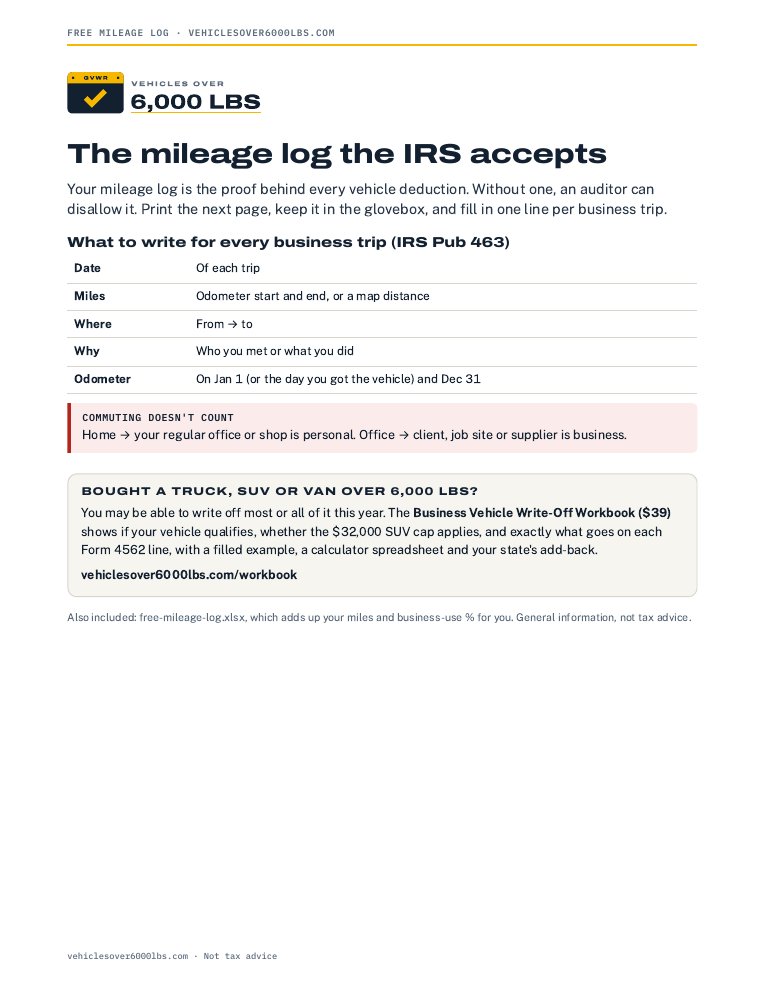
Weight is only the first of three tests. You also need more than 50% business use, proved with a mileage log, and the vehicle in service by December 31. The full Section 179 vehicle rules →
Where to find each number
- GVWR: the white or silver certification label in the driver's door opening. It is the line that starts with "GVWR".
- Payload: the yellow Tire and Loading label nearby: "The combined weight of occupants and cargo should never exceed…"
- Curb weight: not on either label. Check the owner's manual or the manufacturer's spec sheet, or weigh the vehicle.
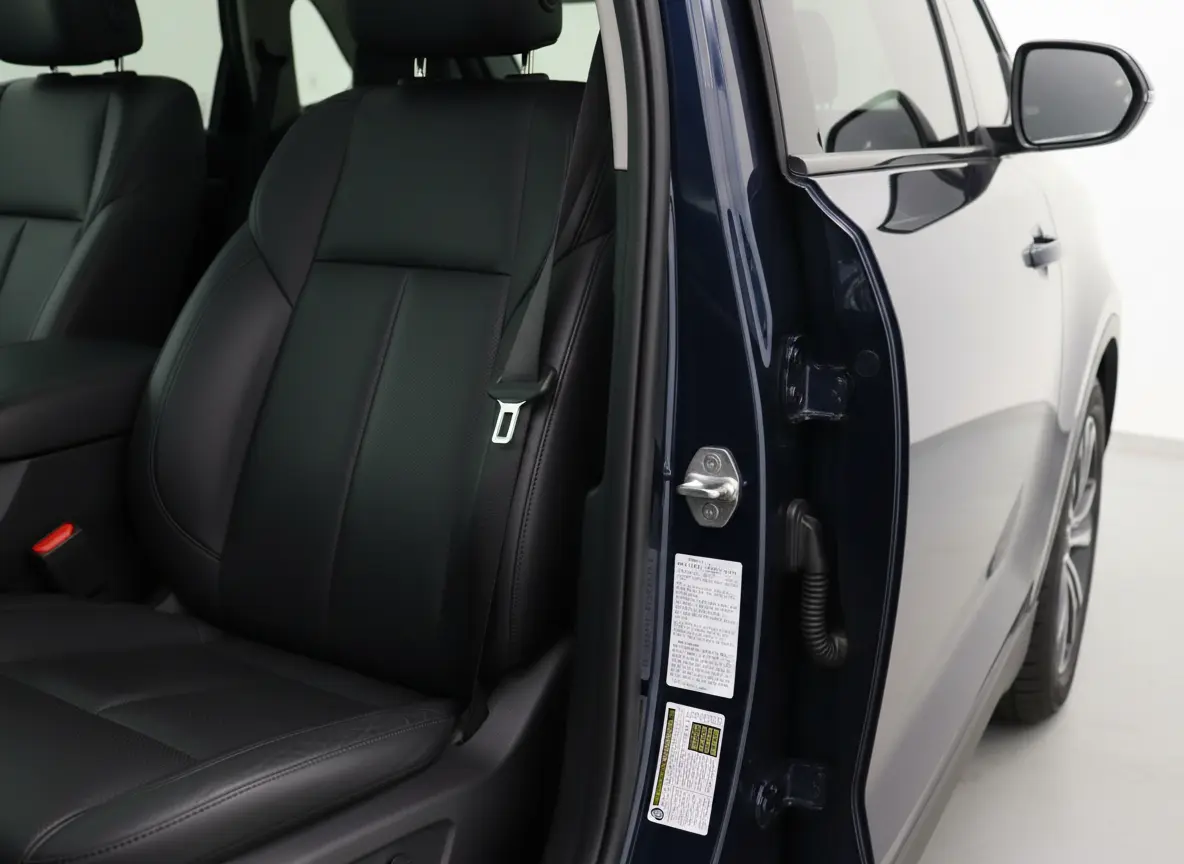
- Open the driver's door all the way.
- Look at the edge of the car body where the door shuts, right next to the seat belt, about waist height. You'll see a white or silver sticker about the size of an index card.
- Find the line that starts with "GVWR". It shows the weight in kg and in lbs (LB). Over 6,000 lbs passes.
- Take a photo of the sticker before you sign. It's your proof if the IRS ever asks.
Not there? A few models put it on the edge of the door itself. Car people call this spot the "door jamb" or "B-pillar", in case a dealer uses those words.
What the sticker looks like on a BMW X5
Ignore GAWR FRT and GAWR RR. Those are per-axle limits and always smaller. And don't use curb weight (the empty car): GVWR is the fully loaded rating, and it's the number the tax code uses.
GVW, GAWR, GCWR and the rest
| Term | What it means | Used for taxes? |
|---|---|---|
| Curb weight | Empty vehicle with fluids and fuel | Only for cars (sedans, coupes) |
| Dry weight | Empty vehicle with no fuel or fluids | No |
| GVWR | Maximum allowed weight, loaded | Yes, for trucks, vans and SUVs |
| GVW | What it actually weighs right now | No |
| Payload | GVWR minus curb weight | No |
| GAWR | Maximum weight on one axle (front or rear) | No |
| GCWR | Maximum for vehicle plus trailer | No |
A few vehicles are heavy enough that the distinction stops mattering. 18 current models weigh over 6,000 lbs before anyone gets in, led by the Cadillac Escalade IQ at 9,127 lbs. See the list →