Mileage reimbursement rates 2026
| Use | 2026, Jul 1–Dec 31 | 2026, Jan 1–Jun 30 | 2025 |
|---|---|---|---|
| Business | 76¢ | 72.5¢ | 70¢ |
| Medical, and moving for Armed Forces | 23.5¢ | 20.5¢ | 21¢ |
| Charity | 14¢ | 14¢ | 14¢ |
The IRS raised the 2026 business rate from 72.5¢ to 76¢ on July 1 because of fuel prices, so 2026 trips need dates. The 2027 rate isn't out yet; the IRS usually publishes it in the second half of December. IRS mileage rate 2027: status and history →
How to calculate mileage reimbursement
| A 42-mile round trip to a client, at 76¢ | $31.92 |
| 400 business miles in a month, at 76¢ | $304.00 |
| 12,000 business miles in a year, at 76¢ | $9,120.00 |
- Counts: office to a client, job site, supplier or second work location; errands for the business.
- Doesn't count: home to your regular workplace and back. That is commuting, even if you take calls on the way.
- On top of the rate: parking and tolls for business trips. Not gas, insurance or repairs: the rate already covers those.
When reimbursement is tax-free
Reimbursement at or below the IRS rate is tax-free to the employee when the employer runs an accountable plan. Three conditions:
Pay more than the IRS rate and the extra is taxable wages. Pay a flat monthly car allowance with no mileage report and all of it is taxable.
Does an employer have to reimburse mileage?
There is no general federal rule. The one federal limit: driving costs you don't reimburse can't push an employee's pay below the minimum wage. A few states go further and require employers to cover necessary work expenses, including California, Illinois and Massachusetts. Employees can't deduct unreimbursed work miles on a federal return, so what the employer pays is all they get.
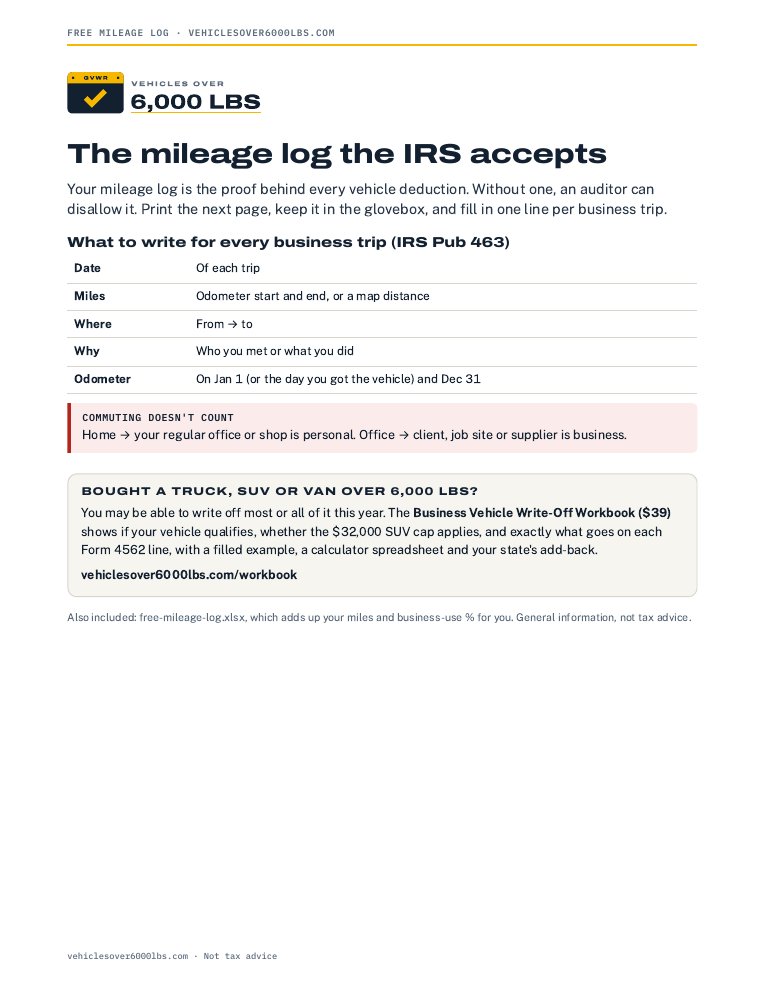
A mileage log that holds up
Printable log + spreadsheet with every column the IRS asks for: date, route, purpose, miles. Works for reimbursement and for your own deduction.
Self-employed: mileage rate or write off the vehicle?
If you work for yourself, nobody reimburses you. The same math, miles × rate, becomes your deduction. But on a new truck, SUV or van over 6,000 lbs used more than 50% for business, deducting the vehicle itself is usually far bigger in year one.
| Standard mileage rate (72.5¢ then 76¢) | $11,138 |
| Write-off: Section 179 + 100% bonus depreciation | $72,000 |
| Extra deduction in year one | $60,863 |
You choose in the first year. Once you take Section 179 or bonus on a vehicle, you can't switch it to the mileage rate later.
Check if your vehicle is over 6,000 lbs · Calculate the write-off · What your mileage log needs